

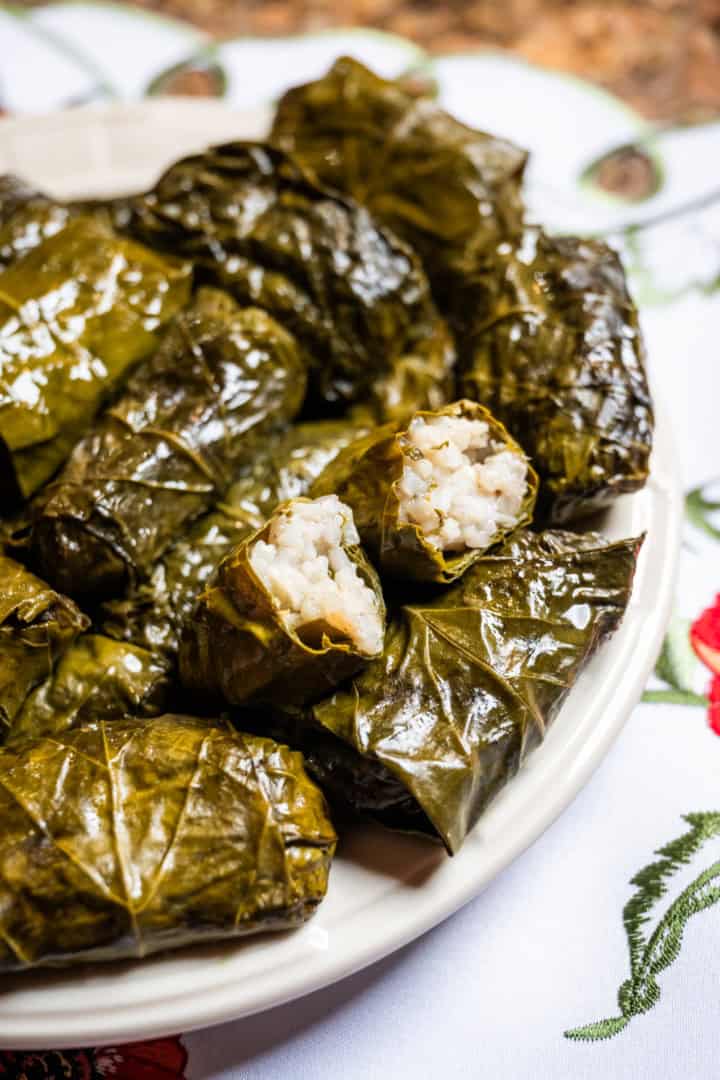
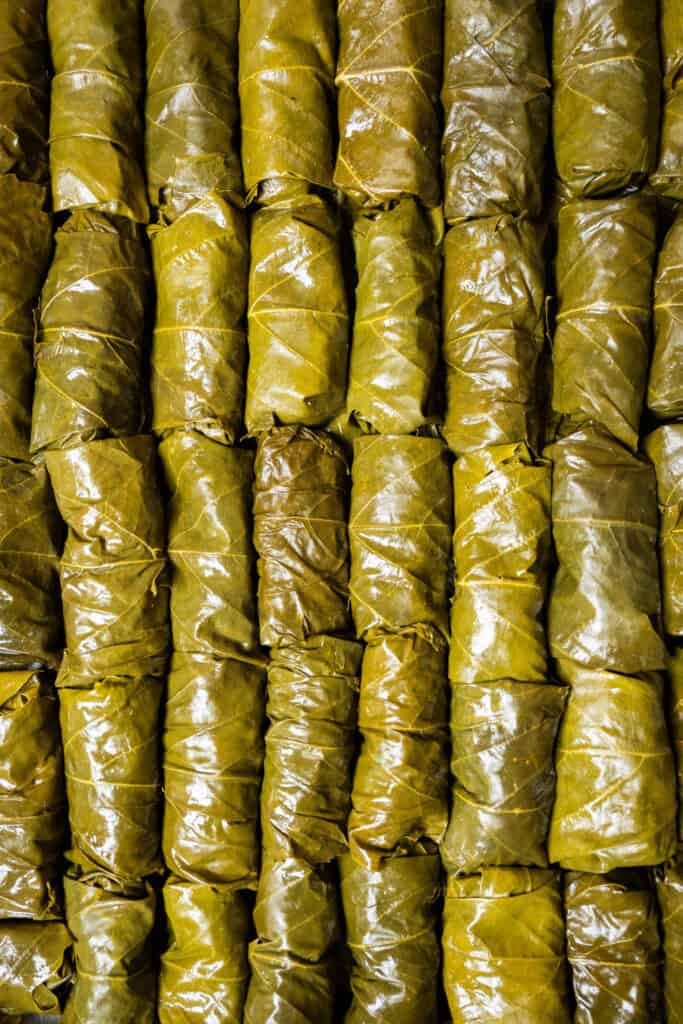
This recipe for Rice Stuffed Grape Leaves is a mainstay of all holiday celebrations for my Armenian family. The flavorful grape leaves are served cold or at room temperature, and are naturally vegetarian.
This recipe for yalanchi is from my grandmother's kitchen. She shared it with my mother and me, and now we're in charge of stuffing grape leaves for family gatherings.
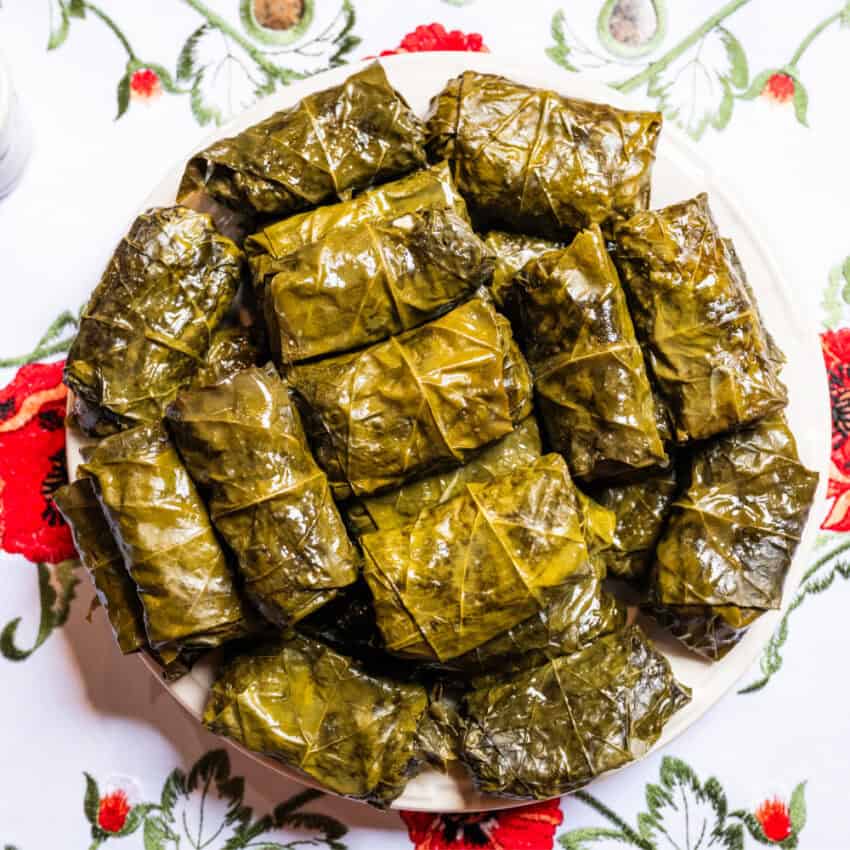
Yalanchi Sarma: Armenian Rice Grape Leaves
Yalanchi Sarma are an Armenian dish where grape leaves are filled with creamy rice filling flavored with lemon, onion, olive oil and spices. Pine nuts are usually in the mix, and some recipes call for currants or raisins too. My family doesn't add fruit, which is kind of funny since we grow raisins, among other crops.
Why Armenian Grape Leaves are called Yalanchi Sarma:
The pronunciation is pretty close to Y'ALL-AN-CHEE. Yalanchi sarma, also just called “yalanchi,” is the name for Armenian vegetarian stuffed grape leaves. ”Yalanchi” means “liar” and “sarma” means "wrapped" in Turkish, which calls out the fact that this is a meat-free version of the more common meat sarma, which uses beef and lamb. Historically, the Armenian Christian Church forbade meat consumption during Lent and many church members were vegetarian on certain days of the week year round, so dishes like this one were popular. While the modern church is a little looser, the recipes last.
Meat Dolma vs. Yalanchi: or how to order at the Armenian or Greek Deli
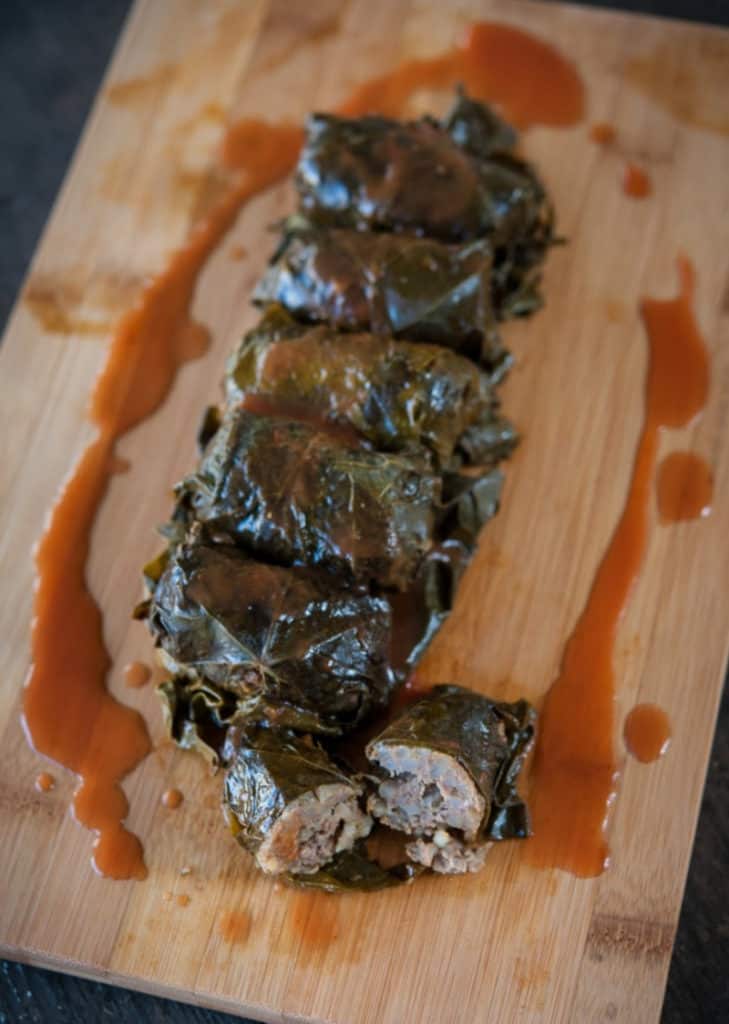
Meat Dolma vs. Yalanchi Sarma: these two are cousins from the grapevine. The meat dolma, in addition to always containing meat, are not always wrapped, and are served warm. Yalanchi are vegetarian, rice based, always wrapped in grape leaves, and are normally served cold or room temperature. Yalanchi are an appetizer or side dish, meat dolma is usually the main course.
If you're at a Greek establishment, ask for meat dolmades or rice dolmades.
Choosing grape leaves in a jar for this recipe:
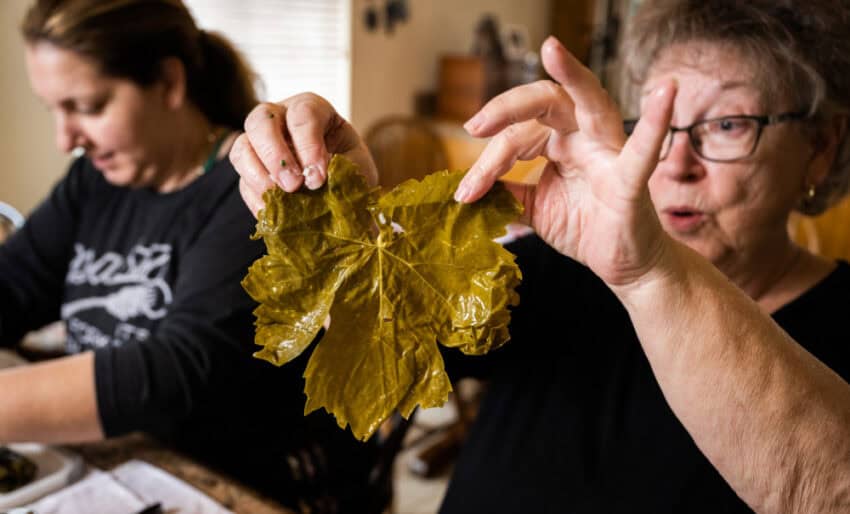
You're going to need some good grape leaves for this recipe. Look at specialty markets, in the "ethnic" section at premium grocery stores, or online. You want at least two large jars or three smaller (10 oz or so) jars. The brine should look greenish but clear, and you shouldn't see any dark brown or tears in the leaves through the side of the jar.
What you need for this rice grape leaf filling:
The creaminess in the rice filling for Armenian grape leaves comes from slow-cooking long grain grain rice - no dairy involved. Here's what you'll need:
- white onions
- olive oil
- long grain or extra long grain rice
- fresh parsley
- pine nuts
- allspice
- salt
- jarred grape leaves
- lemons or lemon juice
- water
The onions are the thing.
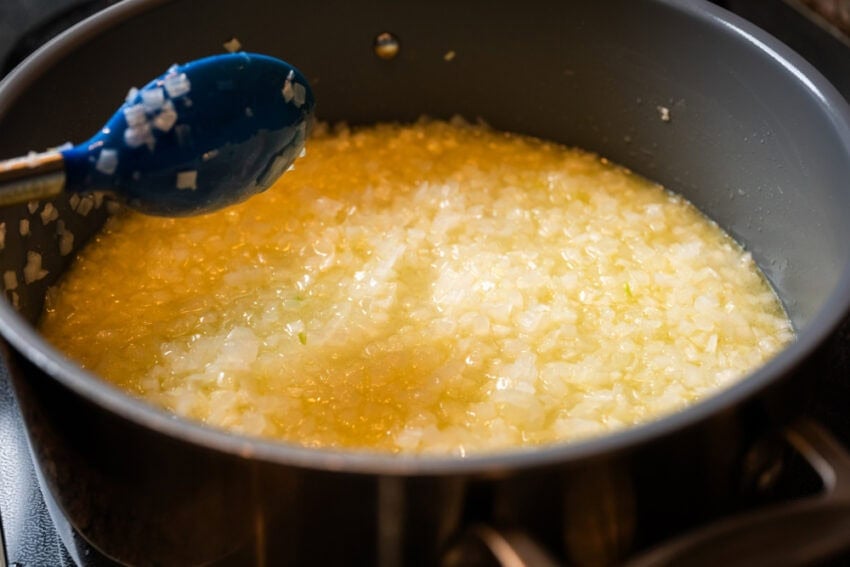
This recipe calls for 10-12 white onions - yes, a dozen onions for two cups of rice. The onions cook slowly to become super soft and flavorful, making a creamy filling where the onions are texturally undetectable - it's all about the flavor.
In addition to a solid grape leaf rolling technique, the onions make the yalanchi.
Get your rolling station ready, and let's make these Rice Stuffed Grape Leaves!
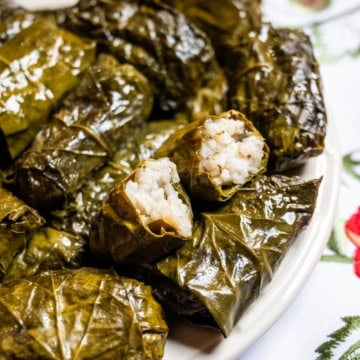
Rice Stuffed Grape Leaves: Yalanchi Sarma
Equipment
- 2 stockpots
- 1 plate that fits inside a stockpot
Ingredients
- 10-12 white onions finely diced
- ¾ cup olive oil
- 2 cups extra long grain rice or long grain
- 3 cups water plus ¾ cup (180 ml) for cooking
- ½ bunch fresh parsley finely chopped
- ¼ cup pine nuts
- ½ teaspoon allspice
- 2 teaspoon salt plus more to taste and ½ teaspoon for cooking
- 2 16 oz. jars grape leaves
- ½ cup lemon juice or juice of 2-3 lemons
Instructions
- Cook onions with olive oil in a large stockpot over medium heat until translucent, stirring often. (It should take about 30 minutes since there is so much onion.) Do not brown.

- Add the rice and water to the onions, reduce heat to low. Cover and cook, stirring occasionally, until rice is slightly underdone but most of the moisture is absorbed, about another 20-30 minutes. Remove from the heat and stir in parsley, pine nuts, allspice and salt. Taste the mixture to see if you need to add more salt, and stir that in if you do - but remember that the grape leaves and cooking liquid will add salinity, so slightly under-salted is the goal.
- Allow the rice mixture to cool until it can be handled, and then wrap the filling in the grape leaves. (You can also make the filling the evening before, and chill it in the refrigerator overnight.) If the mixture seems dry rather than moist and creamy, stir in another 2-3 tablespoon olive oil.

- Have a large stockpot ready when you start to wrap the grape leaves. This is the pot you'll cook the yalanchi in.
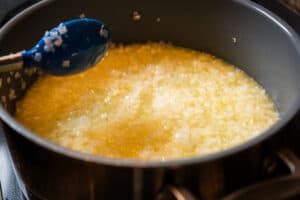
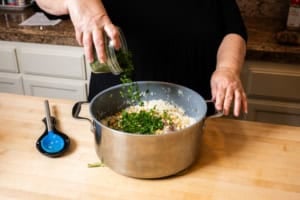
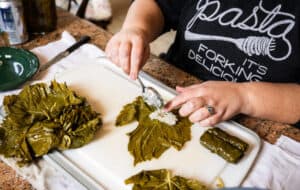
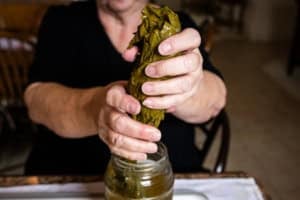
To wrap the grape leaves:
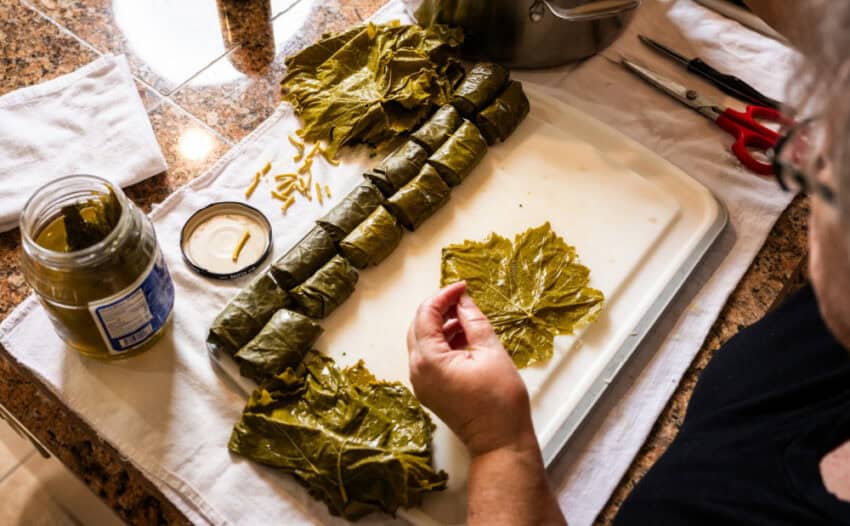
- Pull the grape leaves from the jar, allowing the brine to drain off. They are often bundled with string or rolled in bunches, so remove the string if needed and unroll the leaves so the lay flat. Pinch or cut the stems off each leaf, looking to see if any have rips or tears, or if any seem tougher than the others. Use these flawed leaves to make a layer along the bottom of your pot. The layer should cover the entire bottom and be two leaves deep. If you don't have enough poor leaves for the bottom layer, add a couple of good ones. (You'll need more later.)
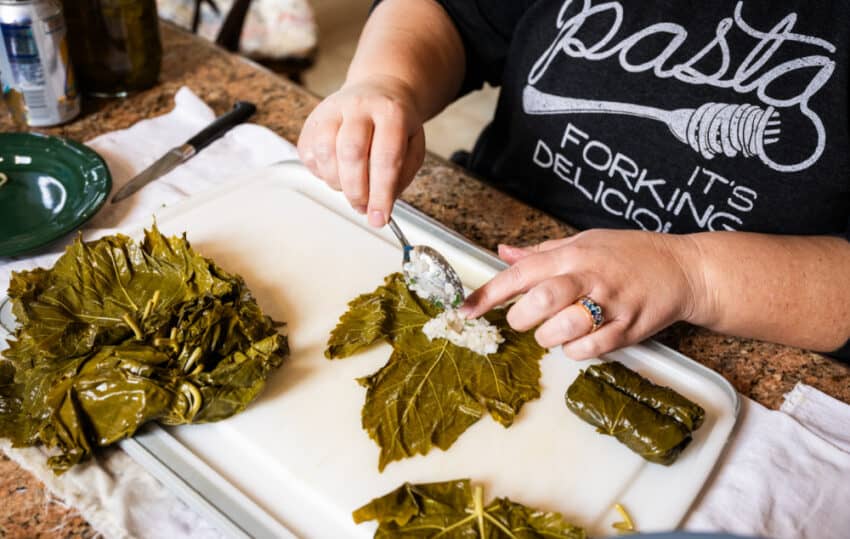
- Now, begin filling the leaves. Work one leaf at at time (or the ones underneath will tear). Place about 1 tablespoon of filling in the widest part of the leaf. Fold the sides in, and then roll the leaf up from the base (where the stem was) to the tip. It should look like a small spring roll or cigar.
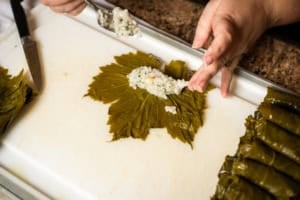
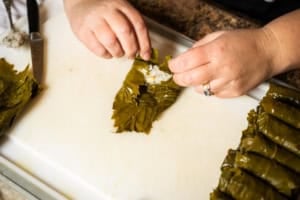
Cooking the stuffed grape leaves:
- Lay the filled grape leaves in the bottom of the pan. Repeat this process, adding each yalanchi right next to the last. (You want them next together, but not packed super tight.) Once you have a full layer of wrapped grape leaves, form another layer. Depending on the size of your pot, you may or may not have a full third layer. Add the stuffed leaves in the center of the third first and work outward. You should have some unfilled grape leaves remaining - don't throw any away that tear!
- Once the filled leaves are in the pot, cover with a layer or two of remaining grape leaves, then put a plate face down over the leaves (this holds everything in place.) Pour in ¾ cup water mixed with ½ teaspoon salt, and cover the pot with a lid.
- Cook over low heat for 1 hour.
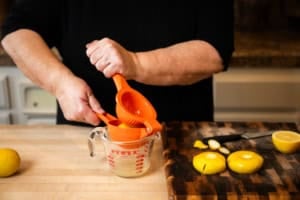
- After cooking is complete, remove from the heat, and use tongs or heat-safe gloves to remove the plate. Carefully pull back the top layer of leaves, then pour the lemon juice over the yalanchi. Replace the top layer of leaves and the pan lid and allow to cool completely. (If you skip this step, the leaves will turn very dark.) After an hour or so, the pan is usually cool enough to move to the refrigerator.
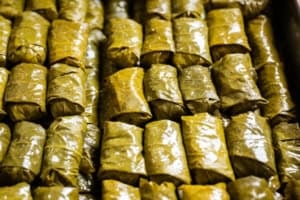
Serve the yalanchi:
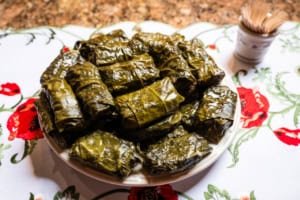
- Serve the stuffed grape leaves cold or at room temperature. You can add a drizzle of olive oil or another squeeze of lemon if you wish.


Notes
Nutrition
Photos by James Collier
More Armenian recipes to try:
Lula Kebab: the best thing your meat counter is missing
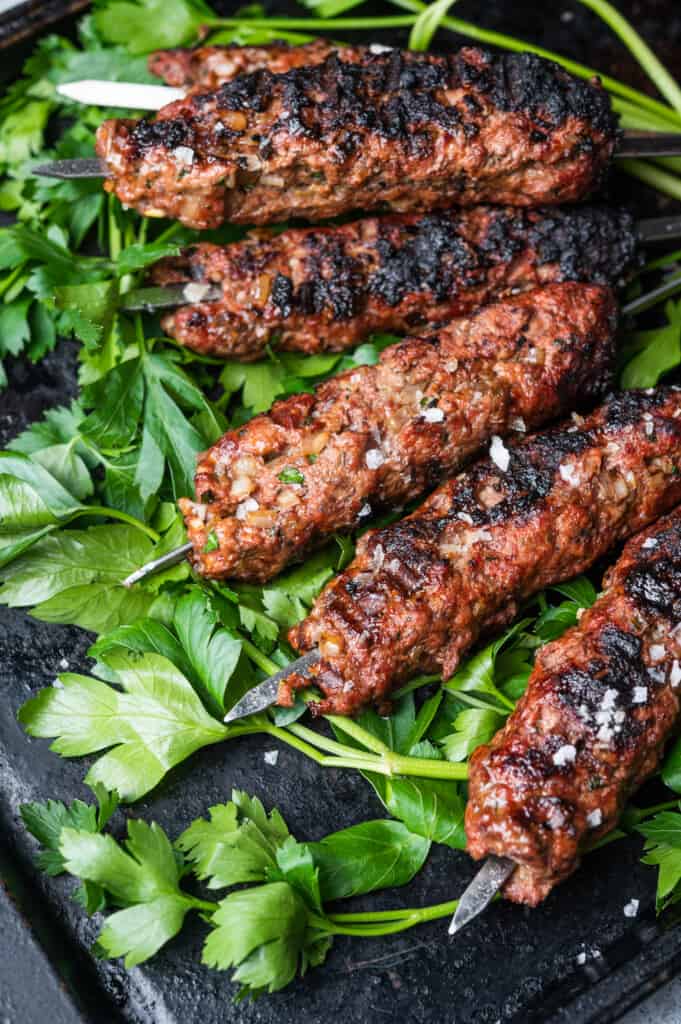
Lula Kebab is a key ingredient of proper meat dolma. Sadly, if you don't have a Hye Deli (Hye means Armenian) or Mediterranean meat counter near you, you probably can't find it. That's OK, because you can make it pretty easily at home with this recipe.
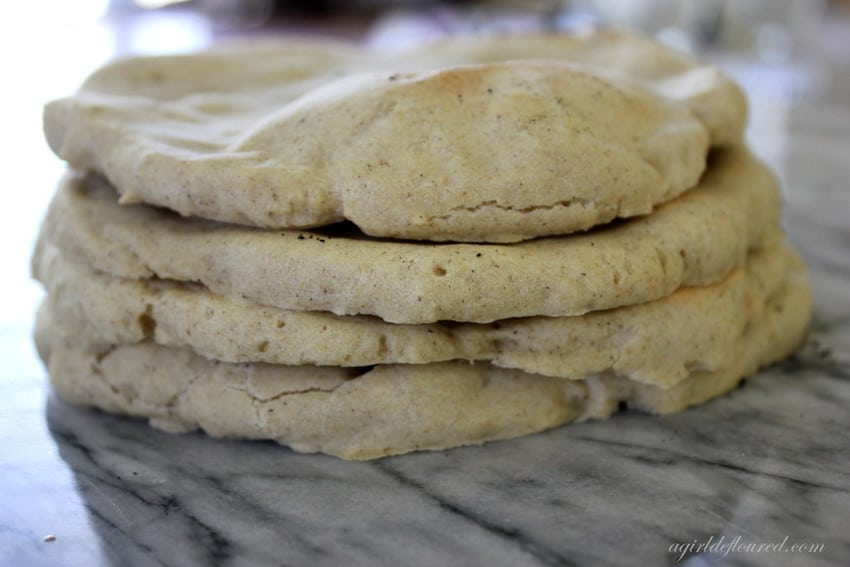
Gluten-Free Pita-style Flatbread Recipe
This gluten-free flatbread recipe from Alison of A Girl Defloured is perfect for pita sandwiches, wraps and more!
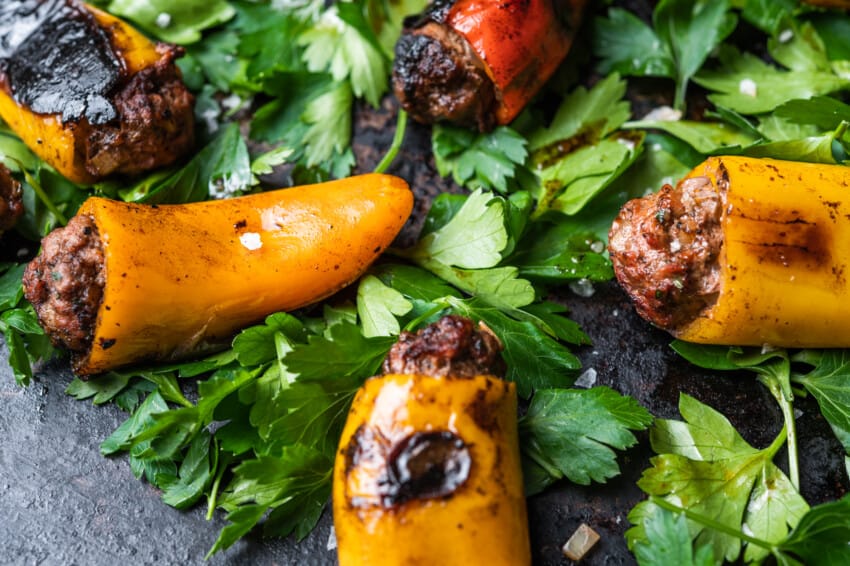
Meat Dolma: Armenian Stuffed Grape Leaves and Vegetables
This authentic Armenian Meat Dolma recipe is so good, that you'll be wondering why you haven't been stuffing grape leaves your whole life.


Let Us Know What You Think