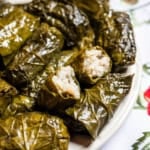
Rice Stuffed Grape Leaves: Yalanchi Sarma
This recipe for Rice Stuffed Grape Leaves is a mainstay of all holiday celebrations for my Armenian family. Full of flavor from onions, olive oil, spices, pine nuts and lemon, the grape leaves are served cold or at room temperature, and are naturally vegetarian.
Servings: 70 servings
Calories: 56kcal
Equipment
- 2 stockpots
- 1 plate that fits inside a stockpot
Ingredients
- 10-12 white onions finely diced
- ¾ cup olive oil
- 2 cups extra long grain rice or long grain
- 3 cups water plus ¾ cup (180 ml) for cooking
- ½ bunch fresh parsley finely chopped
- ¼ cup pine nuts
- ½ teaspoon allspice
- 2 teaspoon salt plus more to taste and ½ teaspoon for cooking
- 2 16 oz. jars grape leaves
- ½ cup lemon juice or juice of 2-3 lemons
Instructions
- Cook onions with olive oil in a large stockpot over medium heat until translucent, stirring often. (It should take about 30 minutes since there is so much onion.) Do not brown.
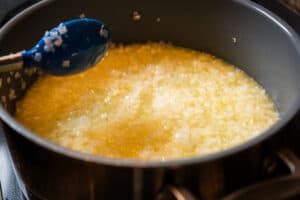
- Add the rice and water to the onions, reduce heat to low. Cover and cook, stirring occasionally, until rice is slightly underdone but most of the moisture is absorbed, about another 20-30 minutes. Remove from the heat and stir in parsley, pine nuts, allspice and salt. Taste the mixture to see if you need to add more salt, and stir that in if you do - but remember that the grape leaves and cooking liquid will add salinity, so slightly under-salted is the goal.
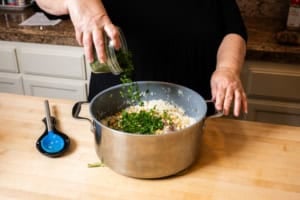
- Allow the rice mixture to cool until it can be handled, and then wrap the filling in the grape leaves. (You can also make the filling the evening before, and chill it in the refrigerator overnight.) If the mixture seems dry rather than moist and creamy, stir in another 2-3 tablespoon olive oil.
- Have a large stockpot ready when you start to wrap the grape leaves. This is the pot you'll cook the yalanchi in.
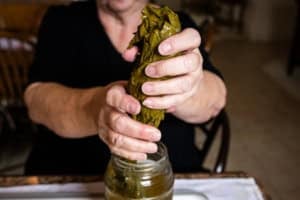
To wrap the grape leaves:
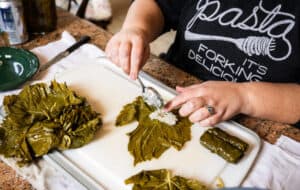
- Pull the grape leaves from the jar, allowing the brine to drain off. They are often bundled with string or rolled in bunches, so remove the string if needed and unroll the leaves so the lay flat. Pinch or cut the stems off each leaf, looking to see if any have rips or tears, or if any seem tougher than the others. Use these flawed leaves to make a layer along the bottom of your pot. The layer should cover the entire bottom and be two leaves deep. If you don't have enough poor leaves for the bottom layer, add a couple of good ones. (You'll need more later.)
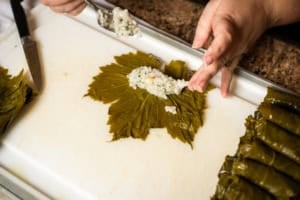
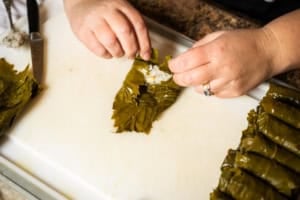
- Now, begin filling the leaves. Work one leaf at at time (or the ones underneath will tear). Place about 1 tablespoon of filling in the widest part of the leaf. Fold the sides in, and then roll the leaf up from the base (where the stem was) to the tip. It should look like a small spring roll or cigar.
Cooking the stuffed grape leaves:
- Lay the filled grape leaves in the bottom of the pan. Repeat this process, adding each yalanchi right next to the last. (You want them next together, but not packed super tight.) Once you have a full layer of wrapped grape leaves, form another layer. Depending on the size of your pot, you may or may not have a full third layer. Add the stuffed leaves in the center of the third first and work outward. You should have some unfilled grape leaves remaining - don't throw any away that tear!
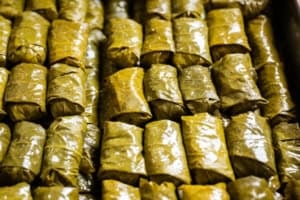
- Once the filled leaves are in the pot, cover with a layer or two of remaining grape leaves, then put a plate face down over the leaves (this holds everything in place.) Pour in ¾ cup water mixed with ½ teaspoon salt, and cover the pot with a lid.
- Cook over low heat for 1 hour.
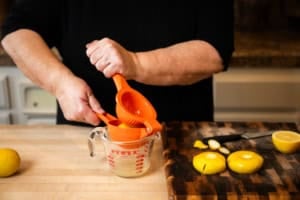
- After cooking is complete, remove from the heat, and use tongs or heat-safe gloves to remove the plate. Carefully pull back the top layer of leaves, then pour the lemon juice over the yalanchi. Replace the top layer of leaves and the pan lid and allow to cool completely. (If you skip this step, the leaves will turn very dark.) After an hour or so, the pan is usually cool enough to move to the refrigerator.
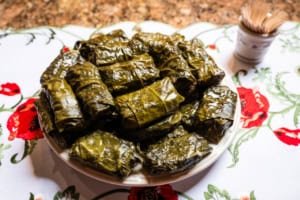
Serve the yalanchi:
- Serve the stuffed grape leaves cold or at room temperature. You can add a drizzle of olive oil or another squeeze of lemon if you wish.

Notes
If desired, you can add 2 teaspoon tomato paste to the cooking liquid.
Nutrition
Calories: 56kcal | Carbohydrates: 7g | Protein: 1g | Fat: 3g | Saturated Fat: 0.4g | Polyunsaturated Fat: 0.5g | Monounsaturated Fat: 2g | Sodium: 69mg | Potassium: 54mg | Fiber: 1g | Sugar: 1g | Vitamin A: 2007IU | Vitamin C: 3mg | Calcium: 32mg | Iron: 0.3mg